
Lectures
These are tentative lecture plans, we will adjust our class based on student feedback. We will provide recording and slides after class. Please check this page often!
-
 What is a Game? What is Game Design? (1/15)
tl;dr: Introduction to the basics of what defines a game and the role of a game designer.
[slides] [recordings]
Suggested Readings:
Description: Let’s start with the basics. What is a game? What distinguishes a game from other artforms and media, and what is the role and objective of a game designer in creating one? Let’s explore some of the most respected definitions of what constitutes a game and clear up some common misconceptions along the way.
-
 Analyzing Games - Mechanics, Dynamics, Aesthetics (1/20)
tl;dr: Learn the MDA framework to analyze and improve games systematically.
[slides] [recordings]
Suggested Readings:
- Hunicke, R., LeBlanc, M., & Zubek, R. (2004). MDA: A Formal Approach to Game Design and Game Research.
- LeBlanc, M. (2004). Mechanics, Dynamics, Aesthetics: A Formal Approach to Game Design.
Description: Let’s learn a theoretical framework for understanding, analyzing, and improving games by analyzing them systematically. We’ll practice applying this framework to a variety of different games.
-
 Game Loop (1/28)
tl;dr: Games function as machines with core loops that sustain player engagement through challenges, actions, and feedback, with different games optimizing for progression, social play, or mastery.
[slides] [recordings]
Description: In this lecture, we dive into the mechanics that make games compelling and engaging. We explore why players spend countless hours in games, identifying common motivators such as social play, progression, and mastery. The concept of games as machines is introduced, highlighting how game loops create an ongoing cycle of challenges, player actions, and feedback. Through examples like Tetris, chess, Minecraft, and The Sims, we analyze how different games structure their core loops to maintain engagement. The lecture also covers what makes a good loop, emphasizing clarity, motivation, feedback, and satisfaction. Finally, we discuss broken loops that lead to disengagement and explore design strategies to maintain player involvement.
-
 Player Choice (2/3)
tl;dr: Explore how meaningful player decisions define interactivity and impact in games.
[slides] [recordings]
Suggested Readings:
Description: Games are distinguished from other art forms because they’re interactive! Let’s focus on the basic unit of a player’s experience: a single decision. What makes choices feel impactful and meaningful? What are the right number of choices to offer players?
Reference Games: Sushi Go, The Stanley Parable, I Was a Teenage Exocolonist, Fire Emblem, Pandemic, Papers Please, Fallout series, Baldur’s Gate 3, Witcher 3, Thronebreaker
-
 Narrative and Theme (2/10)
tl;dr: Explore how narrative contributes to games and the interplay between story and mechanics.
[slides] [recordings]
Suggested Readings:
- Video Game Narrative: The Different Types and How-To Start Writing – Pinnguaq.
- Playful Narrative: A Toolbox for Story-Rich Mechanics – Polaris Game Design Retreat.
- Practical Tools for Empowering the Relationship between Theme & Mechanics – Polaris Game Design Retreat.
Description: How does narrative contribute to the overall experience of a game? What are the strengths of games as a narrative medium? This lecture will examine the relationship between games and story, exploring how mechanics can complement—or detract from—a story, and the concept of ludonarrative dissonance.
Reference Games: Journey, Papers Please, Hades, What Remains of Edith Finch, Undertale, Omori
-
 Progression in Games (2/17)
tl;dr: Explore the psychology of progression in games and how it influences player engagement.
[slides] [recordings]
Description: Progression is one of the most powerful design tools in game development. Players are naturally drawn to systems that allow them to feel improvement over time, whether through skill mastery, accumulation, or unlocking new options. This lecture explores various forms of progression, from vertical skill-based challenges to horizontal expansion and psychological tricks like streaks, collection, and completionism. We also discuss the concept of flow state and how game difficulty should scale to match player improvement.
Reference Games: Hades, Dark Souls, Elden Ring, Cookie Clicker, Overcooked, Stardew Valley, Tetris
-
Prototyping and Playtesting (2/24)
tl;dr: Playtesting is key to making good games. This lecture covers how to test, analyze, and refine mechanics efficiently, avoiding common mistakes like overcomplication and relying too much on randomness.
[slides] [recordings]
Description: This lecture focuses on how to improve games through playtesting. It covers the importance of iteration, common pitfalls in game design, and strategies for refining mechanics. Students also explored different game design approaches and practiced prototyping methods.
Reference Games: Cooking Mama, Overcooked, Slay the Spire, Vampire Survivors, Mario
-
 Experience Design (3/3)
tl;dr: This lecture covers the difference between viewing games as experience versus games as machines and discusses methods to consider when crafting game feel.
[slides] [recordings]
Description: This lecture focuses on the importance of game feel and what it means to design games as experiences, exploring topics such as sensory design, intent, senses, action, and framing.
Reference Games: Journey, Tetris, Pokemon Snap, Resident Evil, Mysterium, Hades, God of War, Hearthstone
-
 Multiplayer and Social Interaction (3/17)
tl;dr: This lecture explored the design of multiplayer games, focusing on how systems shape player cooperation and competition, and how to encourage prosocial behavior while mitigating toxicity.
[slides] [recordings]
Description: This lecture delved into the complexities of multiplayer game design, emphasizing how game systems can foster either competition or collaboration among players. It highlighted the psychological and social foundations of human interaction in games, explored the challenges of designing for diverse player behaviors, and discussed strategies to reduce toxicity and promote prosocial behavior. The instructor also introduced a variety of board and video games as case studies, each showcasing unique social mechanics such as bluffing, coordination, communication, and asymmetry in goals or roles.
Reference Games: Minecraft
-
 Puzzles and Player Knowledge (3/24)
tl;dr: This class deck presents five core elements—mechanics, catch & revelation, player knowledge, presentation, and difficulty curve—for crafting puzzles that drive player learning and “lightbulb” moments.
[slides]
Description: This class define puzzles as challenges that test player knowledge or skill and survey common puzzle types. They then introduce a five‑part design framework—establishing clear rules and goals (mechanics), creating a compelling problem and logical solution (catch & revelation), accounting for what players already know and their assumptions, optimizing layout and feedback (presentation), and tuning the challenge through a structured difficulty curve—emphasizing progression, feedback loops, and playtesting to ensure puzzles remain engaging and rewarding.
Reference Games: Wallace and Gromit, Myst, Escape from Monkey Island
-
 Game Ethics (3/31)
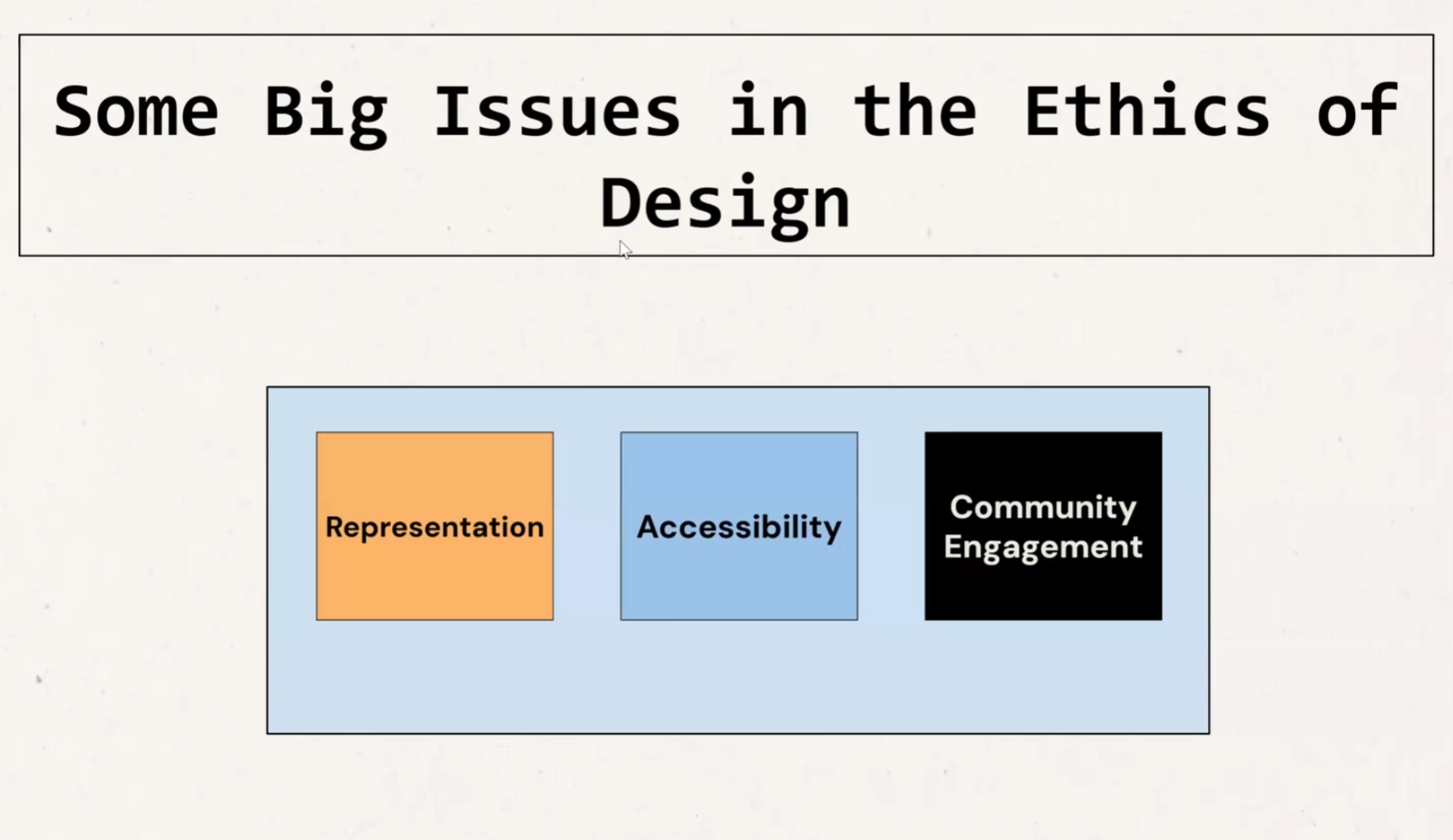
tl;dr: We have a discussion on how applying ethical frameworks to game development—from representation and accessibility to community engagement—shapes player experiences and industry practices.
[slides] [recordings]
Description: In this session, we frames game design as a value‑driven practice, not a neutral technical exercise. Students share personal examples (e.g., Secret Hitler’s impact on trust, League of Legends fostering friendships during lockdown, Undertale’s humanistic themes, Dark Souls’ perseverance lessons), which lead into core ethics topics: the cultural and social impact of games, responsible production (labor practices, diversity in creative teams, pitfalls of tokenism), and inclusive play (accessibility options and community moderation). Real‑world cases—such as Blizzard’s contested diversity metrics, Pokémon Go’s geographic biases, and toxic behaviors in competitive titles—illustrate the stakes, while positive models highlight design choices that empower players and foster healthier communities.
Reference Games: Overwatch, League of Legends, Hades, Pokemon Go
-
 Action & Twitch Mechanics (4/7)
tl;dr: Explore the athleticism in games, focusing on speed, dexterity, and skill-driven mechanics.
[slides]
Description: Can games be sports? Let’s explore “athleticism” in games: adrenaline-inspiring mechanics that require speed, dexterity, and skill.
Reference Games: Bunny hopping/Surfing (Quake, CS), Ultrakill, Zenless Zone Zero, Sea of Thieves, Armored Core, Strinova, For Honor, Guilty Gear, Rocket League